
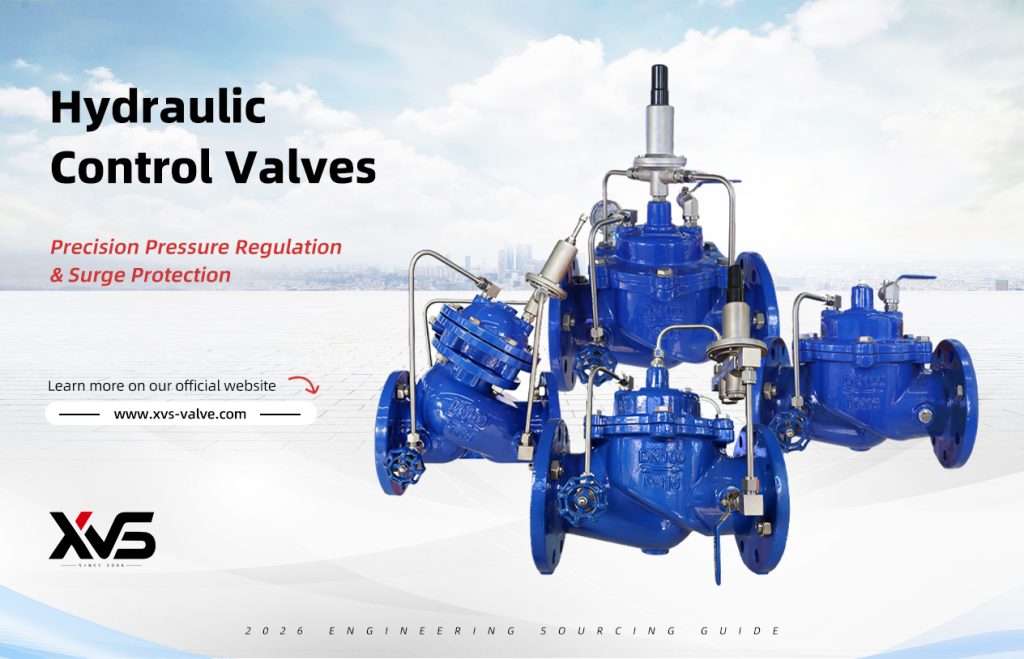
In modern municipal water supply networks, high-rise building distribution systems, and irrigation grids, pressure fluctuations are a primary cause of pipe bursts and non-revenue water loss. While traditional manual valves require constant physical adjustment, a modern hydraulic control valve automatically regulates downstream pressure, flow rate, or liquid levels using the energy of the line fluid itself.
By eliminating the need for external electric or pneumatic power sources, diaphragm-operated hydraulic control valves provide an extremely reliable, self-actuating solution for critical water infrastructure.
In this guide, we explore the key engineering advantages of ductile iron hydraulic control valves and how they safeguard high-pressure water grids.
1. Self-Actuating Operation Without External Power
The defining feature of a hydraulic control valve is its ability to operate independently. Utilizing a flexible diaphragm and spring mechanism connected to top and bottom control chambers, the valve senses pipeline pressure changes directly through a dedicated pilot circuit.
- Grid Resilience: Because the valve relies solely on line pressure, it continues to function perfectly during power outages or remote electrical grid failures.
- Reduced Operational Costs: Eliminating complex electrical wiring and actuators drastically lowers initial installation costs and long-term maintenance overhead for municipal contractors.
2. Precise Pressure Regulation and Water Hammer Mitigation
Water hammer caused by sudden pump starts or rapid valve closures can generate lethal pressure surges in long-distance transmission lines. A high-performance hydraulic control valve serves as the ultimate line defense:
- Pressure Reducing Valves (PRV): Automatically reduce higher, fluctuating inlet pressure to a steady, lower downstream pressure regardless of flow rate changes.
- Surge Anticipator & Relief Valves: Instantly open to dissipate high-pressure waves back to a reservoir or drain, preventing catastrophic pipe fractures.
- Slow Closing Mechanism: The internal hydraulic damping ensures smooth opening and closing speeds, preventing secondary pressure shocks.
3. High Tensile Ductile Iron Body (EN-GJS-400-15 / ASTM A536)
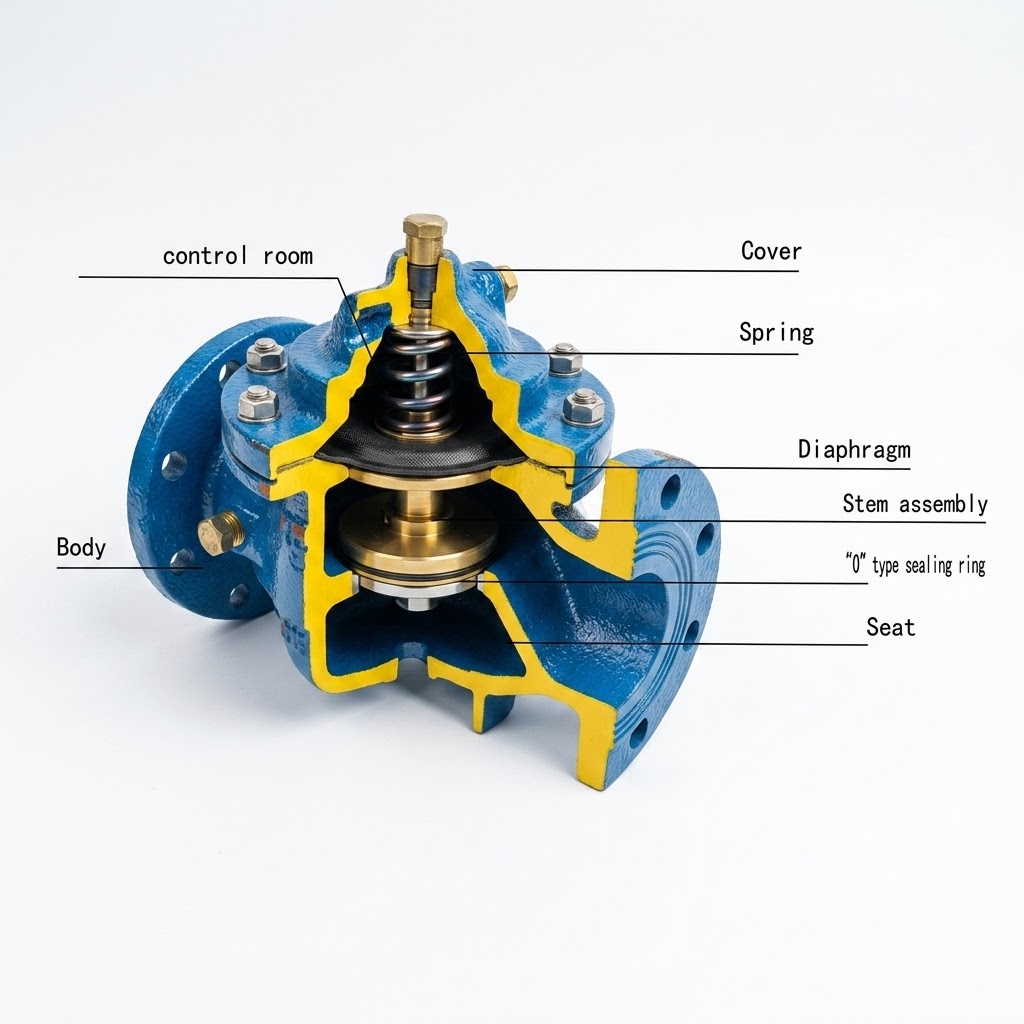
Operating under high-pressure differential conditions requires robust material integrity. Modern hydraulic control valve bodies are cast from heavy-duty ductile iron (ASTM A536 / EN-GJS-400-15), delivering high tensile strength and superior resistance to fatigue.
To guarantee zero internal degradation and maintain drinking water purity, the entire valve body, cover, and internal diaphragm casing undergo shot blasting and high-grade electrostatic Fusion-Bonded Epoxy (FBE) coating (minimum 250μm thickness).
4. Versatile Pilot Configurations for Multiple Functions
A single hydraulic control valve main body can be transformed into various functional control units simply by switching the pilot valve configuration:
- Pressure Sustaining / Relief Valve: Maintains a minimum upstream pressure to protect primary supply zones.
- Float / Level Control Valve: Manages water storage tank levels without overflowing.
- Solenoid On-Off Control Valve: Allows simple electrical override for SCADA system integration when automation is required.
5. Easy In-Line Maintenance and Long Lifespan
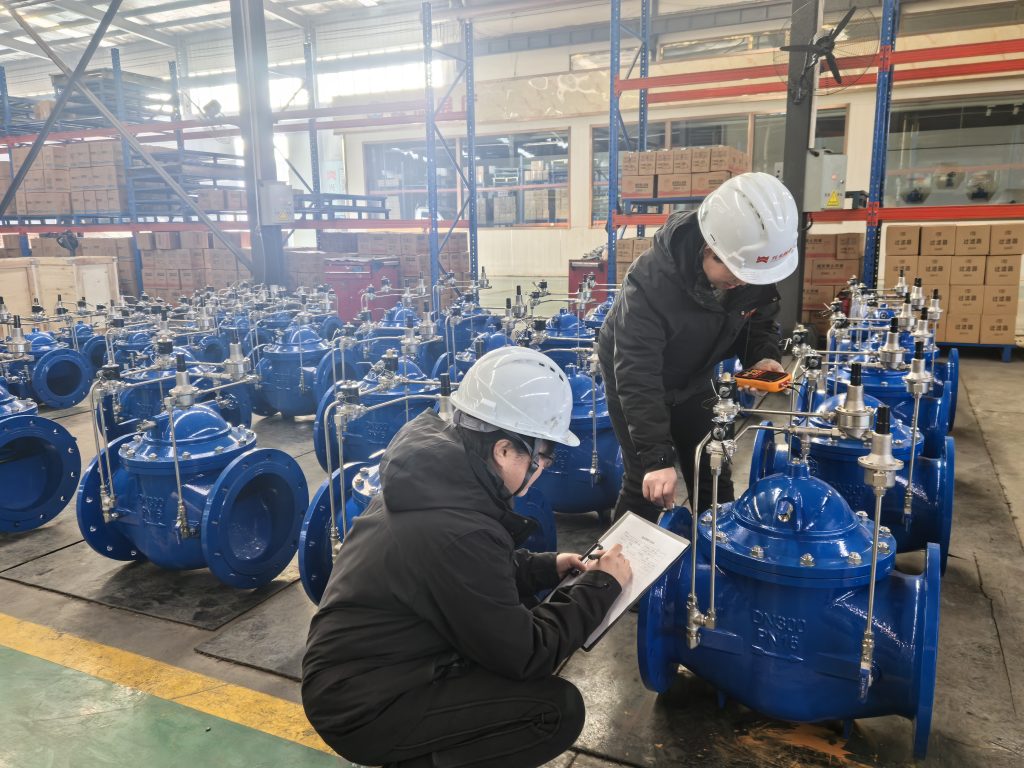
Demounting large-diameter valves from a buried pipeline for repair is costly and time-consuming. Modern ductile iron hydraulic control valves feature a top-entry design, allowing maintenance teams to access internal components, replace seals, or service the reinforced nylon/EPDM diaphragm without removing the valve body from the pipeline.
Every valve manufactured at our Cangzhou foundry undergoes mandatory hydrostatic body testing (1.5x PN) and functional pilot calibration prior to export packaging in accordance with ISO 5208 pressure standards.
Optimize Your Pipeline Pressure Management
Whether your water engineering project calls for large-diameter pressure reducing valves for municipal zones or compact altitude control valves for storage tanks, choosing factory-calibrated ductile iron hydraulic technology ensures long-term reliability.
🔗 Explore technical specifications: Check our full industrial valve catalog for pressure ratings, dimensions, and pilot options.
📩 Need factory-direct pricing? Reach out to Deputy General Manager Pony and our technical engineering division through our Contact Us page for technical drawings and competitive FOB quotes.