

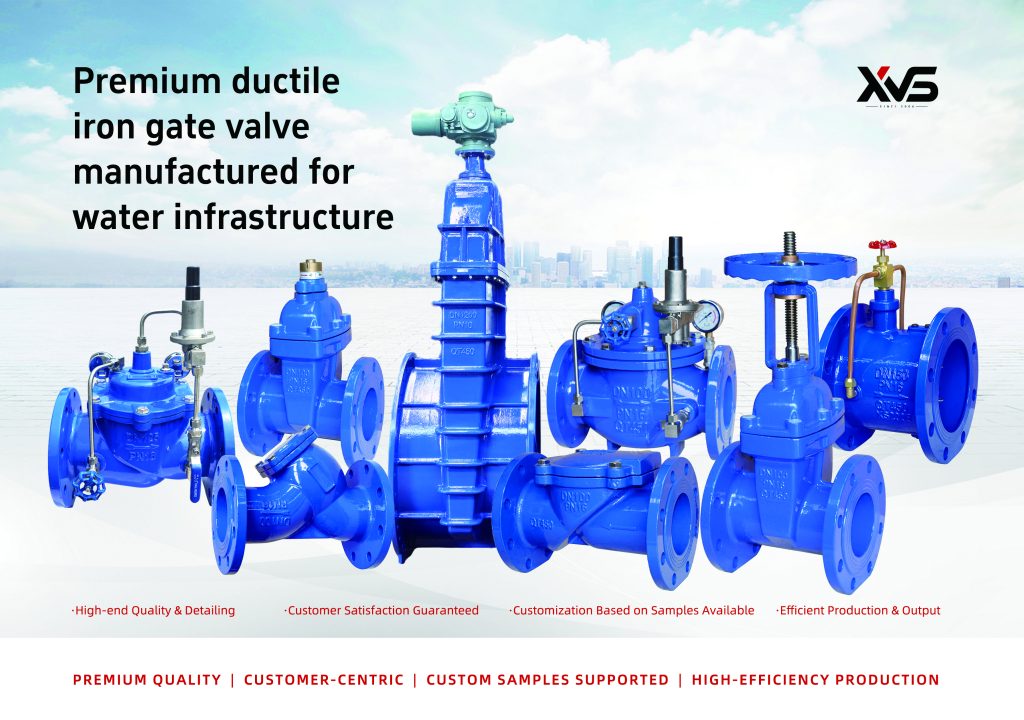
When selecting fluid control equipment for municipal water networks, industrial plants, and commercial infrastructure, choosing the right material is absolutely critical. The ductile iron gate valve has rapidly become the global industry standard, replacing older, traditional materials across modern pipeline projects.
For decades, grey cast iron was the default choice for water valves due to its low initial cost and basic manufacturability. However, as operating pressures in modern pipelines increase and environmental conditions become harsher, engineers and project managers require materials that offer long-term reliability, enhanced safety, and lower maintenance costs.
Let’s dive deep into the technical and economic reasons why upgrading to a ductile iron gate valve is the smartest, most secure investment for your next heavy-duty pipeline project.
1. The Core Difference: Microstructure and Ductility
The fundamental difference between grey cast iron and ductile iron lies deep within their microstructure.
Grey cast iron contains graphite in the form of flakes. While this makes the metal easy to cast and machine at a low cost, these sharp microscopic flakes create natural stress points within the material, making it inherently brittle. If subjected to physical impact, ground shifting, or sudden pressure surges, standard cast iron is highly prone to cracking or shattering.
In contrast, ductile iron undergoes a precise magnesium treatment during the foundry pouring process. This specialized treatment forces the graphite to form into spherical nodules rather than flakes. This nodular structure acts as a microscopic shock absorber, giving the ductile iron gate valve its signature flexibility (ductility), exceptional high tensile strength, and superior impact resistance.
2. Superior Strength and Elevated Pressure Ratings
When specifying pipeline materials for industrial applications, adhering to strict international standards matters. A typical ductile iron gate valve manufactured to ASTM A536 or EN-GJS-400-15 specifications offers a tensile strength exceeding 400 MPa, which is more than double that of standard grey iron.
This superior structural strength allows these valves to safely handle much higher working pressures (commonly PN16, PN25, or even PN40). Furthermore, it provides a crucial safety margin against “water hammer”—the sudden, destructive shockwaves and pressure spikes that occur when high-velocity water flow is abruptly halted in a pipeline system.
3. Resilient Seating for Bubble-Tight Shutoff
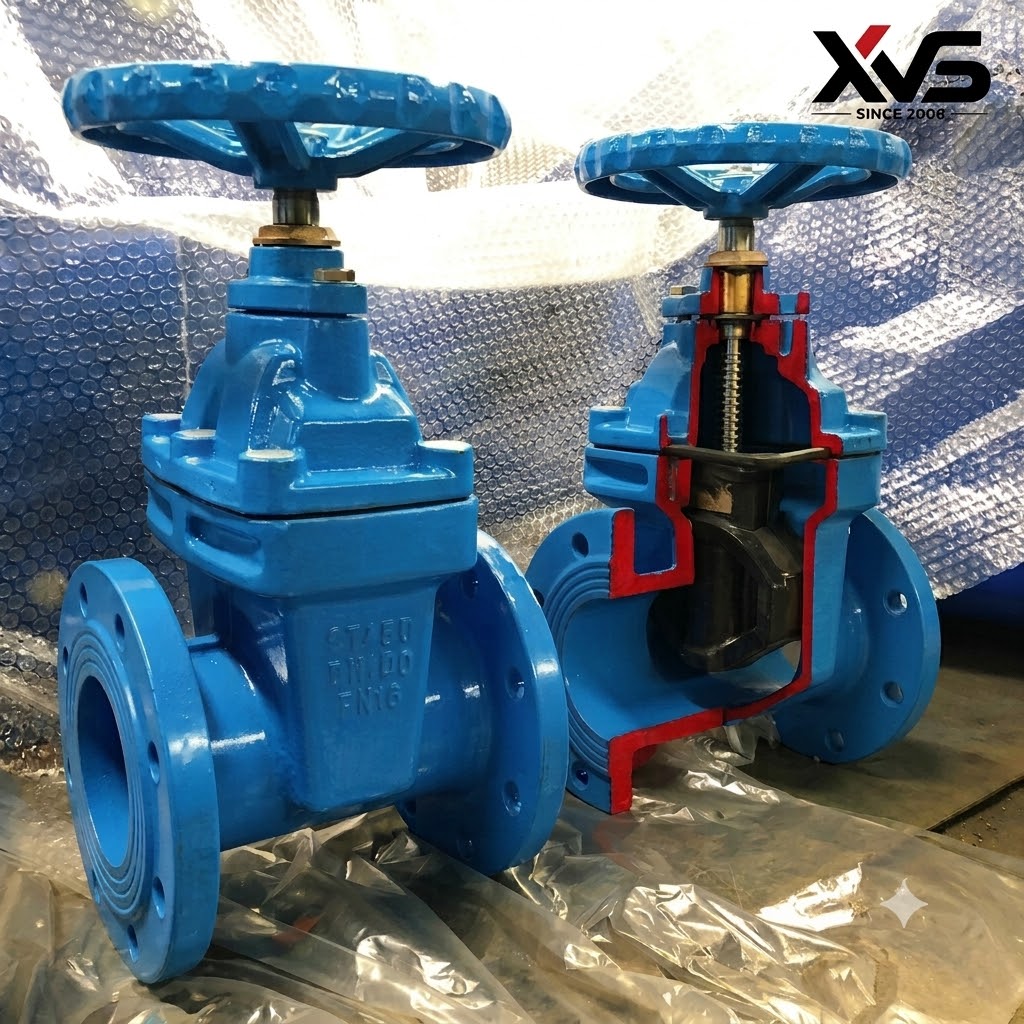
Older cast iron valves traditionally relied on metal-to-metal seating. Over time, debris such as sand or small pebbles in the pipeline would get trapped at the bottom of the valve, preventing a complete seal and causing inevitable leaks.
Modern ductile iron valves eliminate this issue. They are frequently designed as resilient seated valves, featuring a wedge that is fully encapsulated in high-grade EPDM or NBR rubber. When the valve is closed, the rubber compresses to form a perfect, bubble-tight seal around any minor debris. The smooth, flat-bottom design of the valve body ensures that no sediment accumulates, maintaining zero-leakage performance year after year.
4. Lighter Weight for Streamlined Installation
Because ductile iron is inherently stronger and more resilient than grey cast iron, valve manufacturers can engineer the valve body with thinner walls without sacrificing structural integrity or pressure-holding capacities.
This advanced engineering results in a significantly lighter finished product. A lighter valve drastically reduces international freight and shipping costs, simplifies physical handling and installation at the job site, and lowers the overall structural load placed on pipeline supports.
5. Advanced FBE Coating and Lifespan
Water valves are constantly subjected to moisture, acidic soil chemicals, and fluctuating temperatures. To maximize their operational lifespan, a premium ductile iron gate valve is protected inside and out with a Fusion-Bonded Epoxy (FBE) coating.
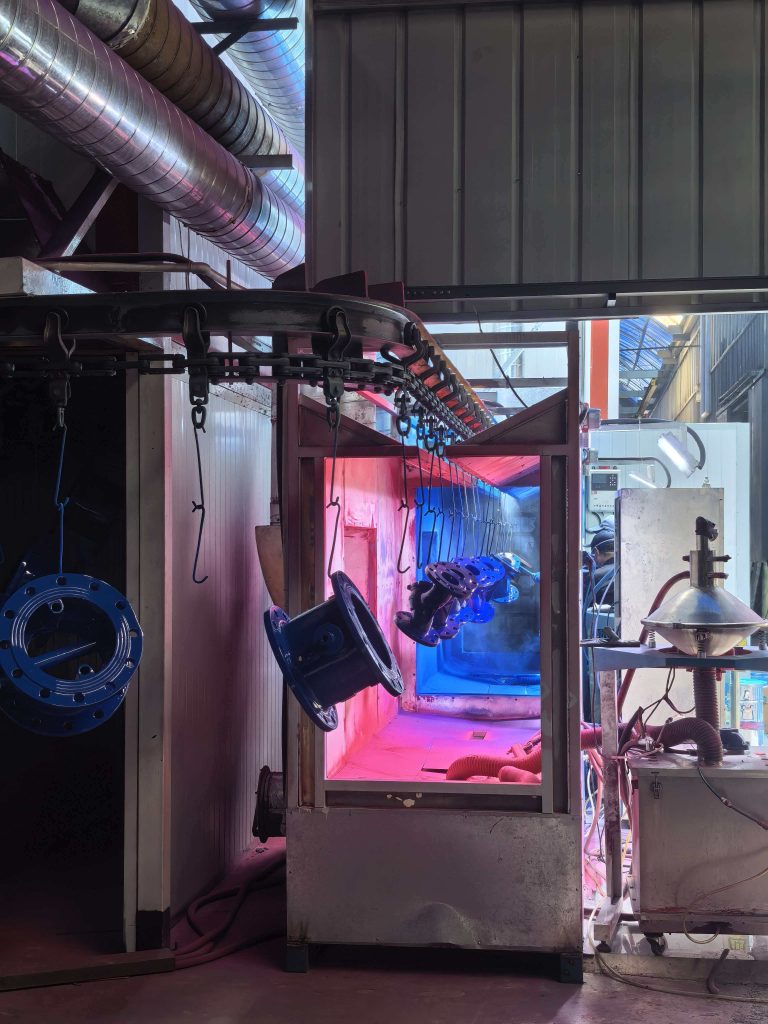
Before application, the iron surface is shot-blasted to perfection. The FBE powder is then applied electrostatically and baked, creating a tough, non-toxic barrier (typically a minimum of 250 microns thick). This completely isolates the iron from corrosive elements and ensures strict compliance with global drinking water safety regulations.
6. Evaluating the Total Cost of Ownership (TCO)
While a grey cast iron valve might present a slightly lower upfront purchase price, the Total Cost of Ownership tells a different story.
When you factor in the high costs of emergency repairs, pipeline downtime, replacement labor, and potential water damage caused by a cracked brittle valve, the initial savings quickly vanish. Investing in ductile iron ensures decades of maintenance-free operation, delivering a far superior Return on Investment (ROI) for municipalities and private contractors alike.
Source Directly from an Integrated Foundry
Choosing the right material is only half the equation; sourcing it from a reliable, experienced manufacturer guarantees its real-world performance.
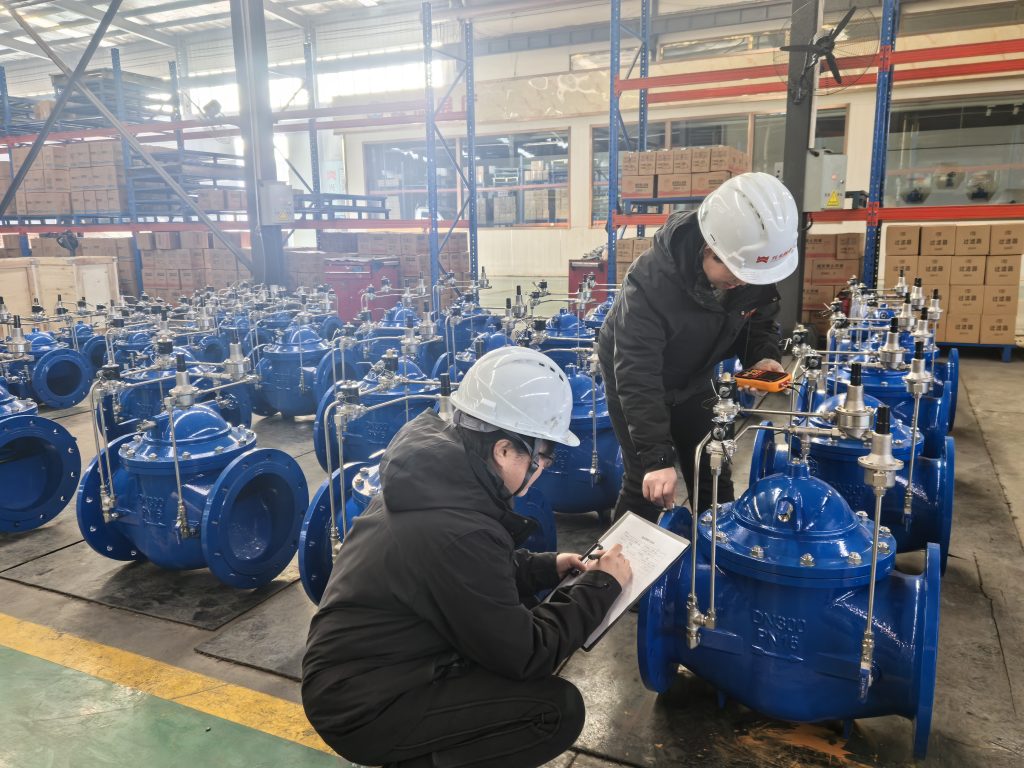
At XVS Valve, our integrated production lines ensure that every valve is cast, precision-machined, coated, and hydro-tested under one roof to meet stringent global standards like ISO 5208. By eliminating trading middlemen, we deliver factory-direct pricing without compromising on heavy-duty quality.
🔗 Explore our manufacturing capabilities: Discover our full range of fluid control solutions in our Industrial Valve Catalog.
📩 Need a custom quote? Contact our engineering and export team via our Contact Us page to discuss your specific pipeline requirements and OEM/ODM options.