
Finding a reliable ductile iron gate valve manufacturer is critical for water treatment plants, municipal pipelines, and industrial infrastructure projects. A single valve failure in a high-pressure line can lead to catastrophic leakage, costly downtime, and severe environmental penalties.
With dozens of global suppliers available, how do project engineers and procurement managers evaluate quality, material integrity, and manufacturing compliance?
This comprehensive sourcing guide breaks down everything you need to know about procuring ductile iron gate valves—from international manufacturing standards and coating specifications to essential pre-shipment quality control checks.
1. Why Ductile Iron is the Gold Standard for Gate Valves
In modern fluid control systems, ductile iron (ASTM A536 / EN-GJS-400-15) has largely replaced traditional grey cast iron.
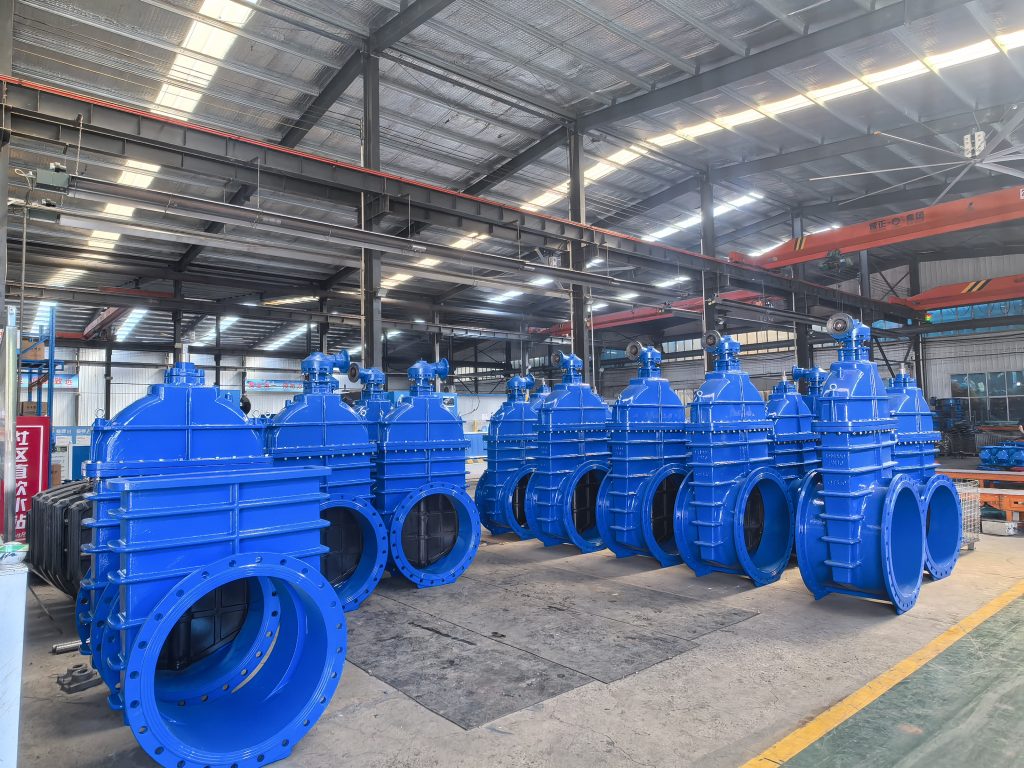
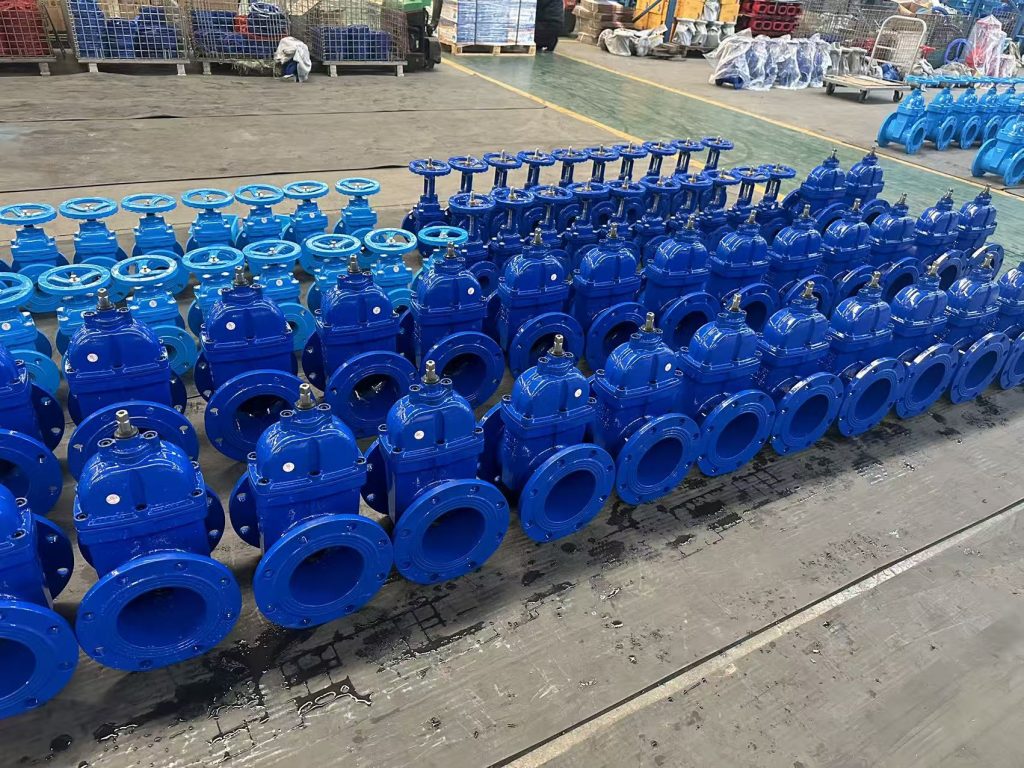
Unlike standard grey iron, which contains flake graphite that creates internal stress points, ductile iron contains spheroidal (nodular) graphite. This microscopic structural difference yields superior physical properties:
- High Tensile Strength: Equivalent to mild steel, resisting high internal pressure surges.
- Ductility & Impact Resistance: Absorbs physical shocks and soil load stress without cracking.
- Corrosion Resistance: Performs exceptionally well in underground water distribution networks when properly coated.
2. Key International Manufacturing Standards to Know
Major regional standards include ISO international standards for European water networks and AWWA standards for North American systems.
Major Gate Valve Standards Comparison
| Standard | Region / Application | Common Pressure Classes | Key Characteristics |
| DIN 3352 / EN 1074 | European Union / Global Water | PN10, PN16, PN25 | Short (F4) and Long (F5) face-to-face dimensions |
| BS 5163 | UK / Commonwealth Nations | PN10, PN16 | Standard for waterworks, stem caps, or handwheels |
| AWWA C509 / C515 | North America / Industrial | 200 PSI, 250 PSI, 300 PSI | Reduced wall thickness (C515), high-tensile ductile iron |
| JIS B2062 | Japan / Southeast Asia | 7.5K, 10K, 16K | Standardized for municipal water supply systems |
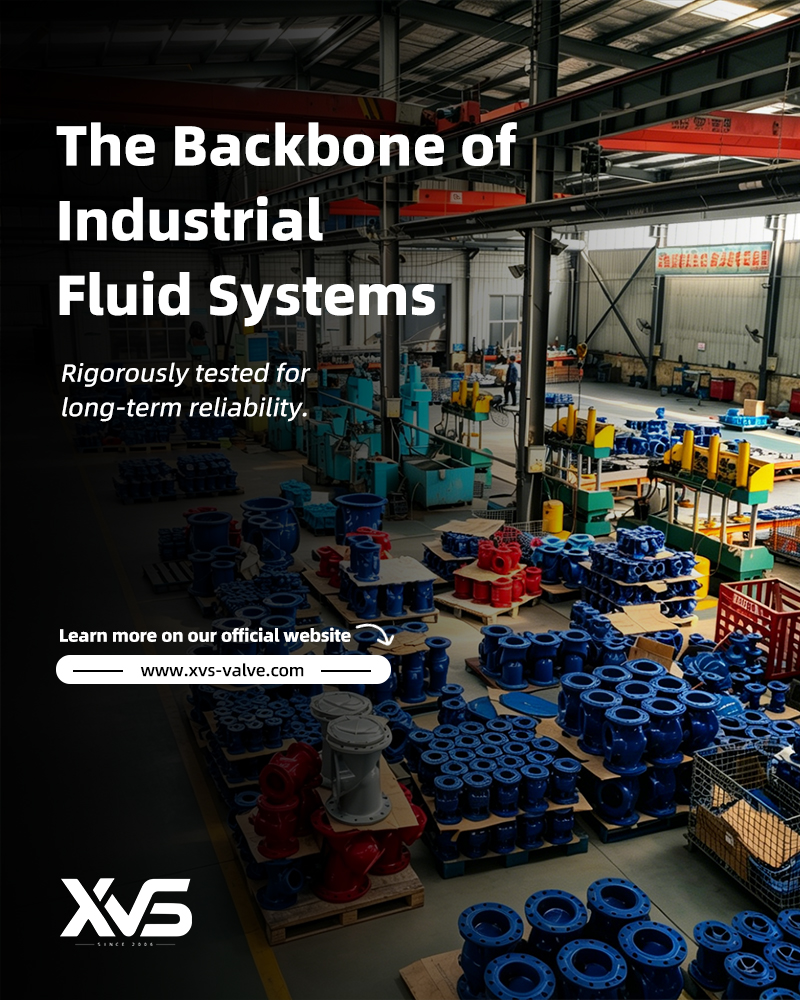
At XVS Valve, our manufacturing facility produces ductile iron gate valves strictly according to DIN, BS, AWWA, and ISO specifications, ensuring seamless integration into your existing pipeline architecture.
3. Resilient Seated vs. Metal Seated Gate Valves: Which Do You Need?
Choosing between a resilient seated gate valve and a metal-to-metal seated gate valve depends heavily on your system’s medium and working environment.
Resilient Seated Gate Valves (Soft Seal)
- Sealing Mechanism: The wedge is fully encapsulated in EPDM or NBR rubber, sealing tightly against the smooth interior of the valve body.
- Best For: Potable water networks, sewage lines, and clean fluid distribution.
- Key Advantage: Provides 100% bubble-tight shut-off (Zero Leakage) and prevents bottom debris accumulation through a flush waterway design.
Metal Seated Gate Valves (Hard Seal)
- Sealing Mechanism: Metal rings (brass, bronze, or stainless steel) are mounted on both the wedge and body seats.
- Best For: Wastewater with heavy solids, high-temperature fluids, and industrial pipelines.
- Key Advantage: Highly durable against mechanical abrasion and thermal expansion.
4. Coating & Material Specs: Protecting Against Corrosion
Corrosion is the leading cause of premature valve degradation. For underground and aquatic applications, coating quality is just as important as metal casting.
- Epoxy Coating Thickness: Ensure the valve specifies Fusion-Bonded Epoxy (FBE) coating with a minimum thickness of 250 microns (μm) internally and externally.
- Hygiene Certification: For drinking water systems, the epoxy material must hold certified approval such as WRAS, NSF/ANSI 61, or DVGW.
- Stem Material: Opt for corrosion-resistant stainless steel stems (SS420, SS304, or SS316) with rolled threads for smooth operating torque and extended cycle life.
5. Factory Quality Control: 4 Pre-Shipment Inspection Steps
To avoid receiving sub-standard consignments, require your ductile iron gate valve manufacturer to provide raw material test reports and hydrostatic test certificates prior to dispatch.
A professional factory quality check must include:
- Spectrometer Material Analysis: Verifying the graphite nodularity percentage (minimum 80% nodular) and chemical composition of the iron melt.
- Shell Hydrostatic Test: Testing the valve body at 1.5 times the nominal working pressure (e.g., 24 bar for a PN16 rated valve) to verify structural integrity.
- Seat Leakage Test: Subjecting the closed wedge to 1.1 times the nominal pressure to confirm zero bubble leakage.
- Dry Film Thickness (DFT) Test: Measuring FBE coating thickness across multiple body points using magnetic gauge detectors.
Factory Insight from Xinshui Valve: Every single batch of ductile iron gate valves manufactured at our Cangzhou base undergoes 100% individual pressure testing before packaging and container loading.
6. How to Partner Directly with a Valve Manufacturer in China
Sourcing directly from an established manufacturing base allows EPC contractors and distributors to eliminate trading company markups while maintaining direct technical control over customization.
When evaluating a direct manufacturing partner, ensure they provide:
- Complete Technical Datasheets & 3D CAD/BIM Models for engineering approval.
- Custom OEM/ODM Branding Capabilities (casting your brand name or logo onto the body).
- Flexible Payment Terms & FOB/CIF Freight Handling for smooth international logistics.
Frequently Asked Questions (FAQ)
What is the typical service life of a ductile iron gate valve?
When properly installed and protected with fusion-bonded epoxy coating, a high-quality ductile iron resilient seated gate valve has an operational service life of 30 to 50 years in municipal water applications.
Can ductile iron gate valves be used for sewage systems?
Yes. Resilient seated ductile iron gate valves coated with internal epoxy are widely used in sewage systems. For raw sewage with grit or heavy solids, metal-seated gate valves or knife gate valves may be recommended.
What is the difference between PN10 and PN16 pressure ratings?
PN10 indicates a maximum allowable operating pressure of 10 bar (approx. 145 PSI), while PN16 indicates a maximum allowable pressure of 16 bar (approx. 232 PSI). Always select a rating that exceeds your system’s peak working pressure and potential water hammer spikes.
Upgrade Your Project Infrastructure with Xinshui Valve
Selecting the correct valve specification ensures system safety and lowers lifecycle maintenance expenses.
At XVS Valve, we manufacture a complete range of ductile iron gate valves, check valves, and butterfly valves tailored for global infrastructure projects.
🔗 Explore our full product specifications: www.xvs-valve.com
📩 Request a technical quote or factory audit report: Contact our sales engineering team directly via our website today.