
Water treatment valves are essential components of municipal and industrial water pipe networks, undertaking fluid cut-off, regulation and delivery tasks. In long-term continuous operation, these valves are prone to various malfunctions due to complex water quality, pressure fluctuation and temperature changes. The occurrence of water treatment valve faults is related to the number of internal parts, as well as valve design, manufacturing precision, installation quality, operating conditions and daily maintenance levels. This article sorts out four common faults of non-power-driven water treatment valves, analyzes their causes, and shares targeted maintenance and solutions.
Valve Body Damage and Cracking
Valve body cracking and damage are frequent faults in water treatment pipe network operation. The main triggering factors include reduced corrosion resistance of valve materials after long-term water scouring, uneven settlement of pipeline foundation causing valve extrusion and deformation, drastic changes in pipeline pressure and temperature, water hammer impact, and improper violent closing operation.
The effective solution is to eliminate external adverse factors in time, remove damaged equipment, and replace with valves or accessories of the same model to ensure the safe and stable operation of the entire water treatment system.
Transmission Device Malfunction
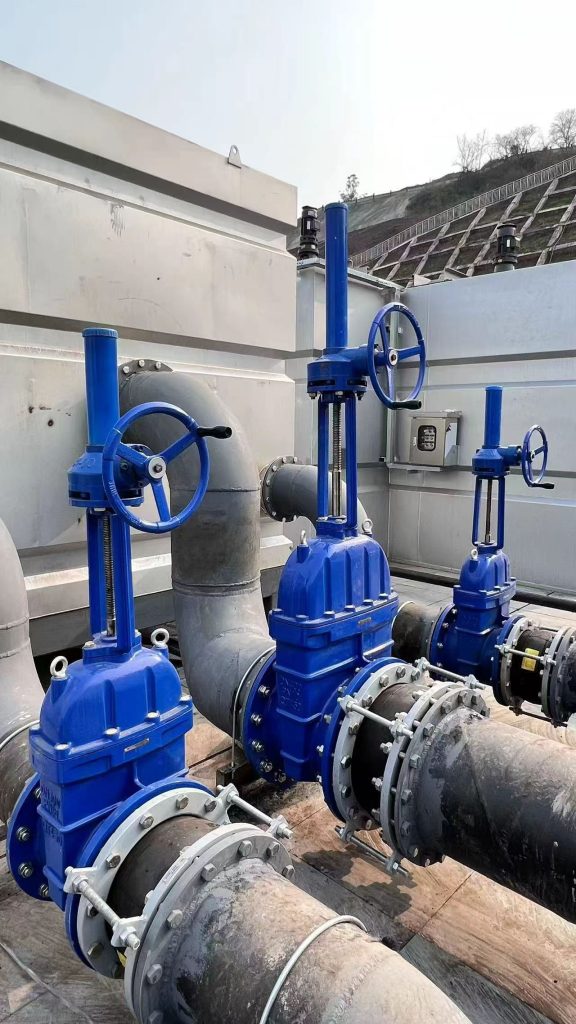
Transmission faults are mainly reflected in valve stem jamming and inflexible operation. If the valve stays fully closed for a long time, the valve stem will rust and lock up. Non-standard installation and operation will damage valve stem threads and matching nuts. Besides, foreign impurities in water may jam the gate plate.
Long-term half-open and half-closed working state will lead to continuous hydraulic impact, causing thread dislocation, loosening and seizure. Over-tight packing and mechanical top pressure on the valve stem will also result in valve failure to operate flexibly. For mild jamming faults, lubricating transmission parts and slight tapping can solve the problem; severe malfunctions require water stop maintenance or overall valve replacement.
Poor Opening and Closing Performance
Many water treatment valves suffer from incomplete opening, failure to close tightly and other unnormal operating problems. The core causes cover valve stem rust, gate plate jamming and rust locking after long-term static placement, gate plate falling off, foreign matter trapped on the sealing surface, and serious wear of transmission components.
For minor faults, staff can lubricate movable parts, repeatedly switch the valve and use water flow impact to clear internal impurities. If conventional maintenance fails to work, the faulty valve needs timely replacement to prevent pipe network operation obstacles.
Valve Water Leakage
Valve leakage mainly occurs at three positions: valve stem, packing gland and flange gasket. Long-term water erosion causes valve stem wear and sealing surface pits, destroying the sealing effect. Aging and failure of sealing accessories are also key causes. In addition, long-term pipeline vibration will loosen flange and gland bolts, leading to insufficient compression and water leakage.
Maintenance solutions include replacing aging sealing parts, adding sealing media, and readjusting bolt tightness to restore the valve’s overall sealing performance.
Delayed maintenance of the above common faults will cause serious water waste, increase operating costs, and even trigger partial or total paralysis of the water treatment system. Therefore, maintenance staff must be familiar with various valve fault causes and master professional troubleshooting skills to ensure long-term stable operation of the fluid delivery pipe network.
Working with a professional and reliable water treatment valve manufacturer is fundamental to stabilizing engineering equipment operation. A high-efficiency and durable fluid delivery system cannot work without qualified water treatment valves. Formal manufacturers abide by international production specifications, strictly control every manufacturing process, and deliver high-quality, high-adaptability and wear-resistant valves for water treatment projects.
If you pursue full-process quality control, stable supply, professional selection guidance and complete after-sales technical support for water treatment valves, welcome to contact us for cooperation. You can get accurate quotes and customized selection schemes, enjoying one-stop and worry-free procurement services!